By Paul Darroch
Follow The History Islands on Substack for the latest Jersey legends and tales

October 1926
First Tower, Parish of St Helier.
After his fourth pint of cider, Clement turned from the fire. He relished the flush of October flame in the smoky grate; the bawdy jokes and tall tales, but it was time to leave. He would be hauling cargo with these men at first light. For a second he basked in the life and warmth of the pub, but then he bade farewell.
Marianne had cleared her half of stout in the ladies’ room, so he swept her up and they strolled arm-in-arm along the Inner Road. The sun was sinking earlier now, and these were fitful, broken times. Rumours stalked the Island – of strikes and turmoil, of a lingering bitterness and promises unkept.
In the aftermath of the Great War – in which Clement had been too young to serve – Jersey had grown fractured and angry. Too many sons and brothers had not come home, and those who did were not the same men.
They were a jilted generation now, shorn of all innocence. Clement felt an invisible line drawn between him and his older brother Raulin, who had returned from the trenches with a brass medal, a shattered arm, and no words to describe the horrors he had seen.
Clement’s own chivalrous duty that autumn night was to walk his beloved Marianne home. Her granite cottage lay mid-way up Chemin des Moulins. The ancient mills that gave this road its name were long gone. Since they dammed the old stream and peppered it with treatment ponds and reservoirs, they called it by a new name – Waterworks Valley.
The authorities had flooded the site of Le Moulin des Ecoliers, the Scholar’s Watermill, back in 1909, when Clement was a small boy. The medieval mill up there had turned water into coin for centuries, funding generations of scholars, propelling them into priestly service at the universities Oxford and Cambridge. Now it lay lost beneath the rippling surface of Dannemarche reservoir, as half-remembered as the war.
Darkness swept in from the east. This valley, sunk deep between Mont Félard and Mont Cochon, was a vale of shadow. There were no lamps on this road. Yet the harvest moon was strong and full tonight, a spotlight hanging in the sky, draping the trees in silver. Trees, shedding bronze, awaited the skeletal claws of winter.
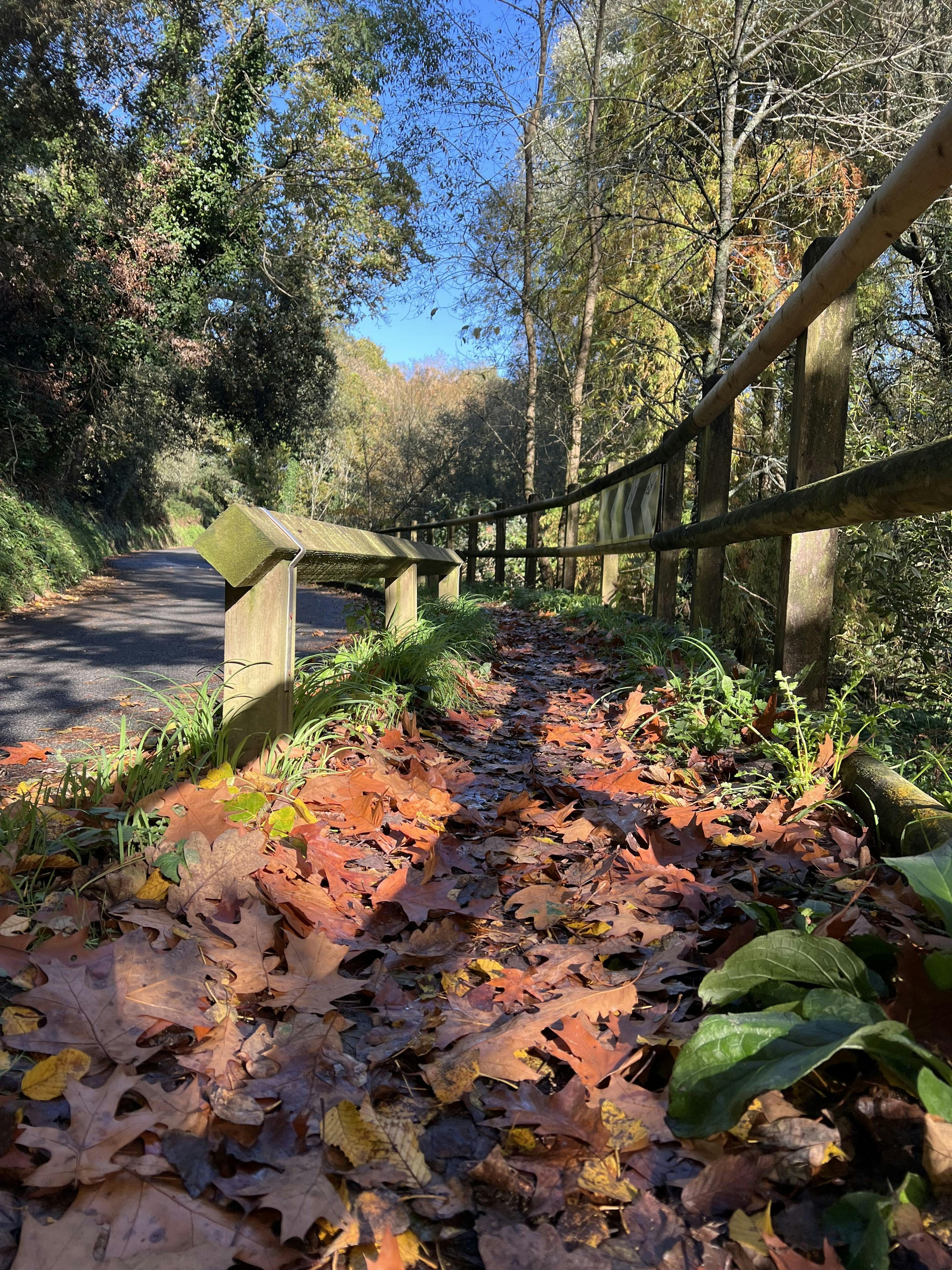
As they walked, Clement and Marianne spoke of the pleasing, fleeting trivia of life; of fashion and film stars and Jersey gossip. Her china-white hand nestled snugly in his, and she whispered a few endearing words in Jèrriais. Marianne giggled, and her laughter was lost amidst the stagnant autumn pools. Yet in the darkness, the cover of night, the lovers dared to kiss. Lingering and dallying in the shadows, savouring each moment together.
They heard the last steam train of the evening, necking its way in from Corbière, skirting bay. Rumour had it the railways were on their last legs, bankrupted by the petrol omnibuses that spluttered and stank their way into town.
The lovers had a favourite spot by the roadside to idle time away. Tendrils and trees around curled around them, like nerves and sinews. They were in a cocoon of sorts, nestling in a forest of the mind. They started to kiss more deeply. Then they were lost in each other, in a night-dream of trees and silver and the glaring, high moon. Until, in a moment, the dream shattered.
Breaking in – a peal of bells! Faint and muffled at first, as if rising from a place far away, somewhere beneath the reservoir. Giddy and lilting now and finally exploding in full and undeniable force. There must be a bellringer hurling himself from a clock tower – and at this ungodly hour! Wedding bells at midnight – utter madness!
They must be coming from St Lawrence’s Church, on the higher ground up there, in the heart of the village. Marianne and Clement exchanged an astonished glance, and a shiver of night chill touched them. And then the chime seemed to slow, and ended with a decisive, mournful clang, grating and disconsonant, as if the ropes had been broken.
“An intruder in the belfry, I’ll warrant”, Clement muttered. “The Centenier must have swiftly put paid to this little prank”. In the moonlight, he opened his pocket-watch and the dial glistened. Strange to say, it was dead on midnight.
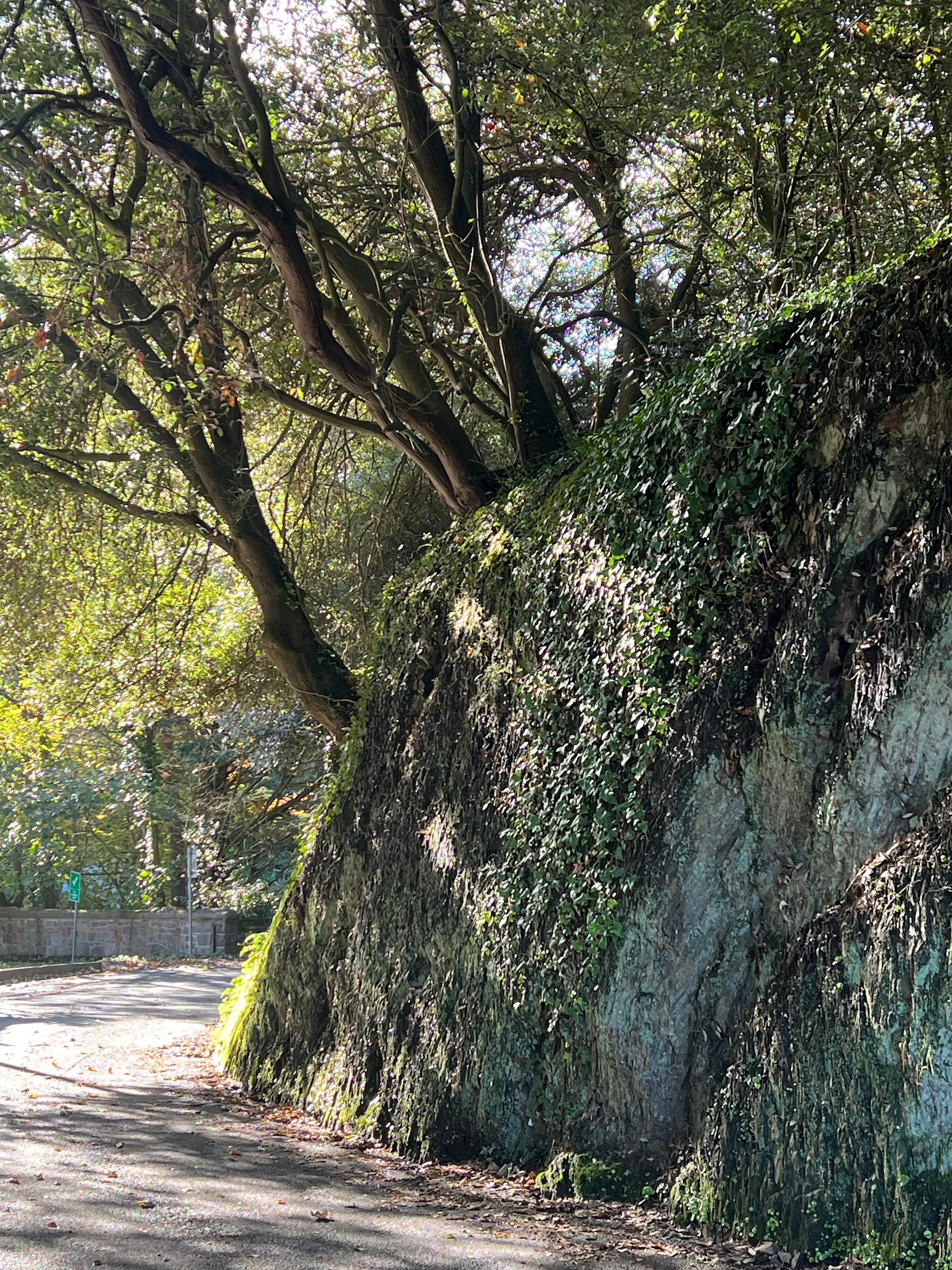
La Rue des Chemins was a serpentine road, passing between sheer cliffs and dank, leaf-clogged ponds. It couldn’t have witnessed a wedding parade in years. Yet one was surely approaching. Round a sharp rock corner, came the unmistakeable, familiar clattering of hooves!
The witnesses crouched, thunderstruck. Peering through a web of leaves, they glimpsed an ethereal sight. Sweeping round the valley came a magnificent coach. Pulled by a team of eight ice-white horses, this was a landau from the old, pre-war world. Dark liveried footmen escorted the bridal parade on its solemn journey. Their eyes could make out a brilliant, white-clad bride, sat proudly in her moment of triumph and beauty.
Who was she? Could they catch a glimpse of the bride? They stared at her, hypnotised. They say people know when they’re being watched. And indeed, the bride noticed. She finally turned to smile back, throwing back her splendid veil with a backwards shake. Clement and Marianne caught her gaze, full-bore.
The bride’s face was a grinning skull. Ice white under the harvest moon. Hollow sockets, with a black void in place of eyes. Emptiness.
Marianne screamed and Clement swore. Their hearts burst and they ran faster than they had ever run before, up and away from the road. Scrambling up the slope, through branches and mud and thick cloying leaves, to Clement’s family cottage. They lurched through the rickety door and bolted it fast behind them, throwing themselves to the floor in terror, their pulses exploding.
“What gives, my young brother?”
It was Raulin. He was still up of course, staring at the fire in the grate. He said so little these days. It seemed as if he went through the motions of daily life like a walking corpse. The joyful lad who signed up for the promise of glory had gone. His mind remained wedged somewhere in the mud and blood of Guillemont, on the terror of the night patrol, under the sniper’s flare.
Still, tonight his old warmth seemed to return awhile. He stood and looked with bemusement at his little brother and his consort, as they stammered out their astonishing tale. The jumble of words and terror and sheer fright tumbled out before the hearth, and then silence reclaimed the room.
At last, Raulin spoke. He calmly emptied his pipe and began. “You must know the legend of Clarisse, my brother. I’ve seen death myself, and her tale rings true enough. This is her story.
Long ago, a wealthy miller’s daughter, Clarisse, was propositioned by Renaud, a stranger from Normandy. He seemed a beguiling young gentleman.
She was hooked like a fish, utterly besotted with him. When he proposed, she accepted with delight; for he was courteous, well-spoken and attentive. It was, he explained, purely through the fickleness of fate that he had become a wanderer and fallen on such hard times.
She begged her father every night for permission to wed, and eventually he yielded, and bestowed a lavish dowry, a heavy bag of silver livres tournois, the fruit of the mill. That night, Renaud asked for her body too, and in the shadow of the great waterwheel, they gave themselves to each other.
When the joyous wedding day arose, no expense was spared. Clarisse had ordered the most magnificent dress, the finest footmen and a full team of coachmen. They paraded through the whole parish, all the way up to the lychgate of St Lawrence Church.
They were all waiting for her there; the priest, her family, her friends from near and far. The great and the good of town and the country parish; the little bonny bridesmaids and the stern, elderly aunts.
All except for one man. Renaud never came. No apology and no message, but the dowry was gone. The conman had vanished like a thief in the night, no doubt to stalk his next victim. Deflowered and deceived, Clarisse was now cruelly shunned by the parish. Serpent tongues wagged, lewd jokes were exchanged, withering glances of judgement were thrown. Even her own father was unforgiving, livid at the loss of a year’s hard-earned profit.
Clarisse soon sickened and took to her bed. They say she died of a broken heart, by the wheel in her father’s stone watermill. Within a week, they would bury her at the very church where she was due to be wed. You can still see her gravestone. The inscription has faded to grey over the centuries, but the Rector will know the place”.
Raulin paused, and for a moment the fiery ghosts of the Somme flashed through his mind. This is what it means when the darkness falls, and the world means nothing at all. Then, he emptied his pipe and finished the tale.
“That wasn’t quite the end of the story, though. Once a year, they say, she passes through this mortal realm again. The mill is underwater now, of course, but still, she finds a way. Then her wedding procession begins anew, snaking through this valley of shadow.
That was the woman you saw – Clarisse, the daughter of a miller, the skeleton bride. She is forever searching for her lost love, lamenting the warmth she once knew, seeking a glimpse of the world she left behind”.
© Paul Darroch 2026
Subscribe to The History Islands for more stories – follow the link below:
